Tenuta San Guido reopens the Padule d i Bolgheri Wildlife Refuge to the public— Italy's first private wildlife sanctuary
Bolgheri (Livorno), 23 October 2025 - Tenuta San Guido announces the reopening of the Padule di Bolgheri Wildlife Refuge to the public — a natural area o f extraordinary importance and the very first private wildlife sanctuary in Italy, established i n 1959 b y Mario Incisa della Rochetta.
After years dedicated to scientific monitoring and environmental conservation, the Refuge is once again welcoming visitors with a programme o f guided experiences designed to raise awareness and foster a deeper understanding of the importance of biodiversity and ecosystem preservation through direct observation.
Visits by reservation, in small groups
Visits are available from November to April, the period when the wetlands are at their most vibrant and host a large number of overwintering species. Access is limited to small groups of no more than 15 participants, always accompanied by qualified environmental guides, to ensure a respectful and non-intrusive experience, fully in harmony with nature.
Visits are open to private individuals and families once a month on Sundays; to birdwatchers and wildlife photographers twice monthly on Fridays; and to tour operators and organised groups depending on availability.
The itineraries, tailored to each group, allow for an in-depth exploration of the habitat complexity and the history of the site. Particular attention is dedicated to local primary schools (fourth and fifth grades), which are involved in an innovative educational programme combining classroom activities with outdoor workshops — where play becomes a powerful tool for discovery and connection with nature.
All experiences are by reservation only, with no minimum number of participants required, and are designed to offer an authentic visit aligned with Tenuta San Guido's philosophy: to know, in order to protect.


A pioneering legacy
The Padule di Bolgheri Wildlife Refuge was conceived as a groundbreaking conservation project thanks to the vision of Mario Incisa della Rochetta, who in 1959 designated a portion of the estate as a protected area. The initiative was later formally recognised by WWF Italy — of which Incisa was a founding member and Honorary President.
Since then, Tenuta San Guido's environmental philosophy has remained unchanged, treating agriculture and nature conservation as components of a single, interdependent system. “First came Bolgheri, then WWF Italy,” remarked Fulco Pratesi, co-founder of WWF Italy — a phrase that encapsulates the spirit of the original vision, which remains strikingly relevant today.
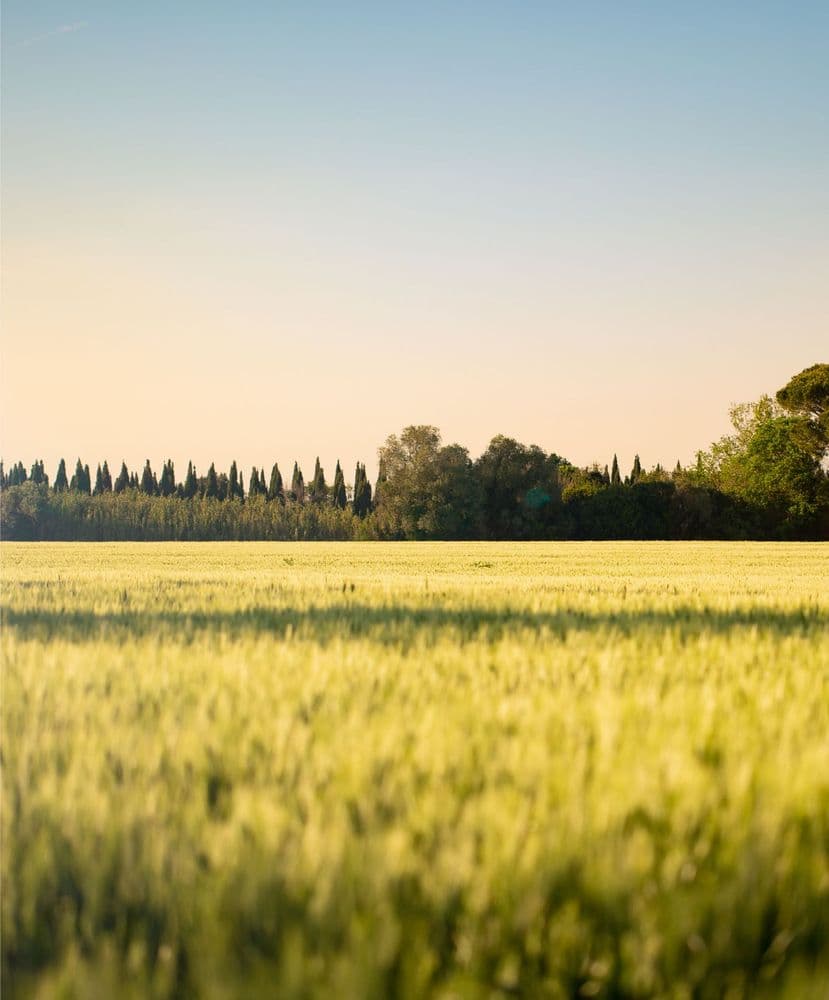
Still affiliated with WWF and fully integrated into the wider Tenuta San Guido estate, the Refuge stretches along the coastline between Donoratico and Cecina, bordered inland by the famed Viale dei Cipressi. The area hosts an extraordinary variety of environments: 80 hectares of seasonal freshwater marsh, fed solely by autumn and winter rains, and more than 440 hectares of lowland forests, humid meadows, pine groves, dunes, cultivated fields and natural pastures.
The complexity of these habitats — recognised under the EU’s Natura 2000 directive as both a Special Area of Conservation (SAC) and a Special Protection Area (SPA), and since 19 December 1977 as a Wetland of International Importance under the Ramsar Convention — makes the Refuge an area of exceptional biodiversity. Over 250 bird species have been recorded here, including the Eurasian spoonbill, purple heron, ferruginous duck, bittern and marsh harrier. It also provides refuge for the European pond turtle, Hermann’s tortoise, crested newt, beech marten, porcupine and, more recently, the wolf.
“The Refuge represents the deepest root of Tenuta San Guido’s bond with the surrounding natural environment,” says Priscilla Incisa della Rochetta, Head of External Relations at Tenuta San Guido. “It stems from the same principle that guides our vineyard work: observation, respect and balance. Biodiversity is the living foundation of our territory’s identity and regenerative strength.”
A living laboratory for conservation and research
The Padule di Bolgheri is today a true open-air laboratory where agriculture and the natural environment coexist in balance — a place where human activity is integrated within the ecosystem. The estate’s agricultural practices — from the cultivation of grasses and nectar plants to the maintenance of hedgerows and humid grasslands — are designed to promote biodiversity and support vital life cycles.
In collaboration with the Centro Ornitologico Toscano (Tuscan Ornithological Centre) and under the supervision of expert naturalists, Tenuta San Guido actively contributes to research and monitoring initiatives: annual bird censuses; studies on amphibians, reptiles, beetles and butterflies; assessments of water and soil quality; and investigations into habitat resilience.
Daily management of the Reserve also includes tangible conservation efforts, such as restoring flooded areas, building small bridges across canals, preparing nest boxes for rollers and other bird species, and removing plastic waste from the shoreline — where driftwood and seagrass are left intact to preserve their natural anti-erosion function.
“The more diverse an area is — in species, habitats and interrelations — the more resilient it becomes,” explains Matteo Tamburini, Head of Ecosystem Management and Coordinator of Educational Activities at Tenuta San Guido. “Through these new initiatives, we aim to offer people — especially the younger generation — the opportunity to observe and understand biodiversity up close, so that environmental responsibility may become part of our everyday culture.”
An invitation to rediscover a place where nature teaches, and where human stewardship becomes part of a shared, ongoing process of care.